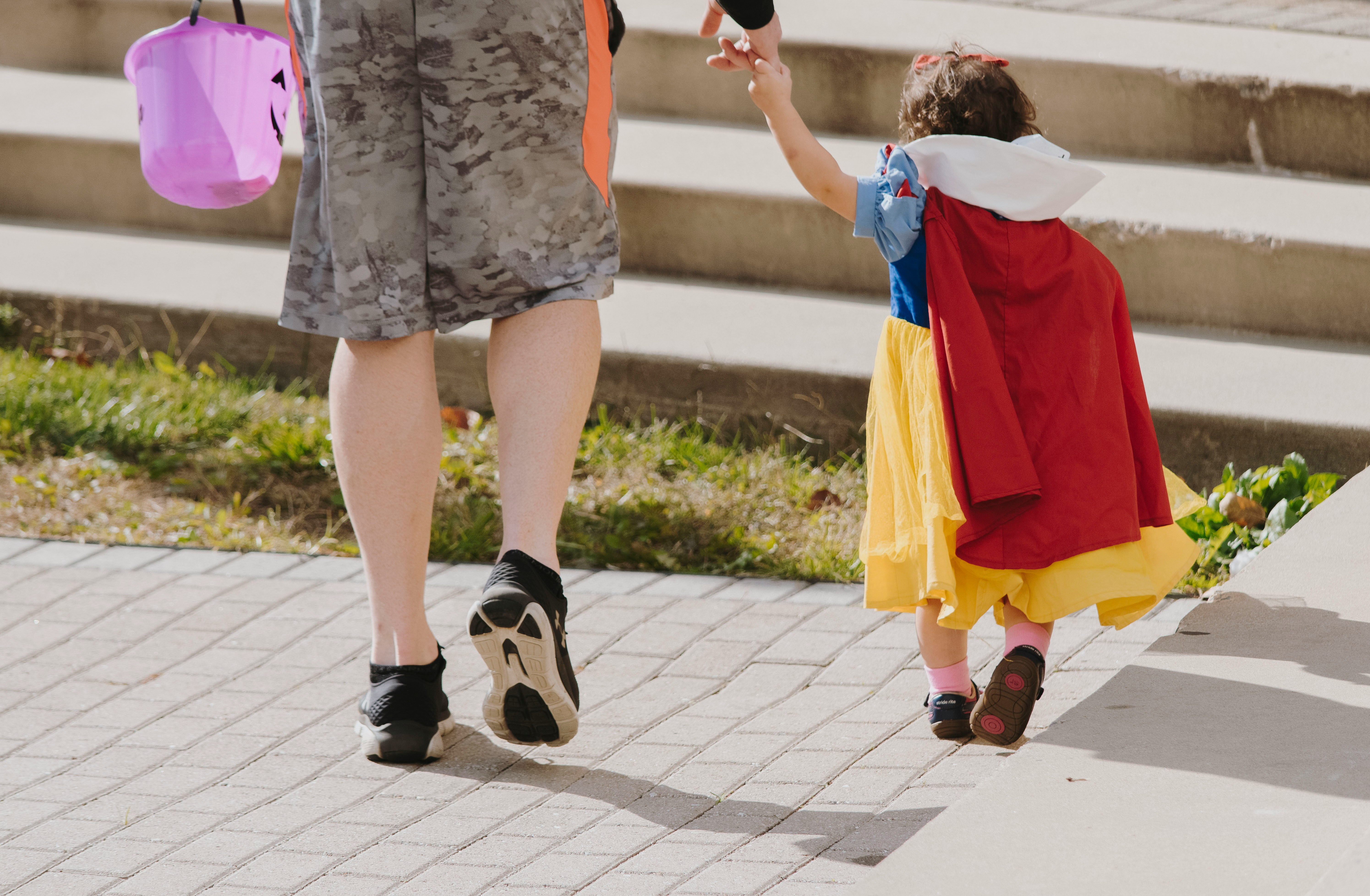
Photo by Haley Phelps on Unsplash
Last Halloween, my family found ourselves at a crossroads.
Cards on the table, I don’t love Halloween. Maybe it’s the conservative home I was raised in, maybe it was the spiritual realities I witnessed first and second hand as a pastor’s kid, or maybe it was growing up in San Antonio—a city where dark ghost stories are an enduring cultural staple. But I also don’t hate Halloween. Both the family I grew up in and the one I am raising have always redemptively participated in it. I’m also personally a little grateful for any historically Christian holiday we have on our national calendars—no matter how much we’ve distorted them in practice. But I am one of those people that is uncomfortable with the growing degree of comfort our generation has with the dark elements of this holiday.
My wife feels similarly, and so for the entire time we’ve raised our kids, we’ve taken a safer, lighter participation in the holiday. Heroic character costumes, trick-or-treating with like-minded families at a few houses we know on our street, not reading and watching dark things, and answering our kids honestly when they ask us why we don’t decorate and participate in other things they see around us.
But things changed when we moved last year. We learned that our new street is the center for our neighborhood’s Halloween festivities. The street is blocked off, all the neighborhood school students come, everyone passes out candy, and everyone hangs out outside until after dark. Suddenly, my family was faced with a new set of variables that we hadn’t had to consider before. With a much larger crowd on our street and more elaborate costumes and decorations, our kids would certainly be exposed to much more of the dark side of Halloween than they ever have before. But on the other hand, we’ve never been freely handed this kind of opportunity before—to welcome neighbors at our door, to step onto their porches, to introduce ourselves, and to build in one night dozens of relationships that can make inroads for the gospel.
Regardless of which way we would respond to this situation, my family’s relationship to Halloween was going to change. It had to; it couldn’t stay the same. We would either become more vocal against it, or more willing to step closer. After prayer, my wife and I decided to embrace the opportunity to engage our neighbors—who will be out on our street regardless of if we are or not. Will they find a closed door or an open one at our house? We want them to find smiling faces, kindness, and warm welcome. We want them to see people who are glad to be their neighbor. We want them to see Christ in us.
This greater participation means more conversations with our kids. Some things they see will be fun, and some will be things we should turn our gaze away from. I’ve realized that that itself is a gospel opportunity: My kids will face real darkness in this life, and on this night every year we can teach them first hand. We face darkness with courage, because our God is light. And we face darkness with compassion, because behind every mask and bowl is an image bearer of God in need of his reconciling grace. And God has given us the light—not to keep to ourselves—but to take into the darkness.
I know some of you feel a similar degree of tension as me and some of you don’t. I know all of you will try to faithfully lean into that tension and come, in great or small degree, to a different place than me. I’ve sat across from people who I can tell think I’m too sensitive as well as those who are concerned that I participate at all. That’s okay. That’s the freedom of the Christian conscience.
But the one thing none of us can do is passively let our neighbors, corporations, and media industry teach our families and communities what is spiritually good or true. Whether in our homes or in our communities, Christians are disciple-makers, not bystanders.
Are you participating this year? Wonderful. But I implore you to not do so without talking to your kids about dark spiritual realities and praying for creativity and boldness to interact with your neighbors for Christ. A couple at my church in college had an incredibly steep staircase climb to their front porch. They put up a sign promising king-sized candy bars to whoever made the trek. Along the way, many of the steps were chalked with encouraging or gospel-revealing Bible verses, and they would kindly offer to pray for their visitors while they lingered before the walk down. That’s simple, gospel creativity and generosity. It whimsically demonstrated the generosity of Christ, and it put a Christian family on their neighbors' map.
Are you abstaining this year? Wonderful. But I implore you to not do so without telling your kids your reasons and earnestly and purposefully pursuing your neighbors relationally throughout the year. Each year in my family, we teach our kids the story of Reformation Day (also October 31st). And we read a book with our kids about the history of Halloween. How it began in the 4th century as a day for Christians to honor those who gave their lives in martyrdom for Christ, but over time different cultural meanings were attached to this remembrance of the dead. Children connect with stories, they can handle information like this, and it can help them think deeply about the complex conflicts of the world they find themselves in, so they are more prepared to face future ones.
As you prepare for this weekend, here are some biblical principles to consider prayerfully and creatively together:


